Europe brought supersonic passenger travel to life, but now that the U.S. is trying to bring it back, the Continent says no thanks.
Almost 16 years after the last Concorde flight flew from New York to London, the U.S. — egged on by startups at home — wants an updated regulatory framework to put supersonic planes back in the air and across the Atlantic.
American negotiators this month put forward a proposal in the International Civil Aviation Organization (ICAO) in Montreal to revise international rules for supersonic travel. But Europe wasn't interested, pushing back legislation that could have allowed the speedy return of supersonic air travel.
European representatives were concerned about the greater noise and emissions that may come from supersonic jets, according to officials at the meeting. They also fretted about the adverse effects of water vapor at high altitudes, which works as a greenhouse gas.
In Europe, governments are under pressure to cut emissions, and noise complaints keep airports from expanding. Beyond environmental concerns, Europeans still have vivid memories of the Concorde Flight 4590, which crashed soon after it took off from Paris Charles De Gaulle in 2000, killing all 113 people onboard and speeding up the aircraft phase out.
Monday, February 25, 2019

Sunday, January 6, 2019
We love our pools, and this one especially
I want to tell you about a difficult place that I visit regularly since moving to my suburb in the inner fringes of a large Australian city. The place is a gym, and I like it in the winter because there is a steam room there, a good place to zone out and think about the day. In the summer, the place is best known for its appended outdoor pool.
The gym sits above the pool in a pale alien sphere and, occasionally, at the pool, you see a sunglassed person peer up and say searchingly: “Oh! There's a gym up there.”
The pool itself is famous. It's been immortalised in films, in rare things – famous novels – and even rarer things, famous newspaper articles from the 1980s that are still sometimes photocopied and taught in university classes today. Recently, I saw footage of this iconic pool in the museums of two different capital cities, in two separate art exhibitions, exhibiting simultaneously. We love our pools, and this one especially.
I love this pool very much and need this gym very often, and as with all things we need and love, I take special licence to scrutinise its workings to a level perhaps unwarranted. This essay is a short appreciation, but some of my appreciation takes the form of complaint. As such, I choose to leave the pool – the place – anonymous, in the vain hope that there is room, in our searchable society, to keep certain details undigitised and unnamed.
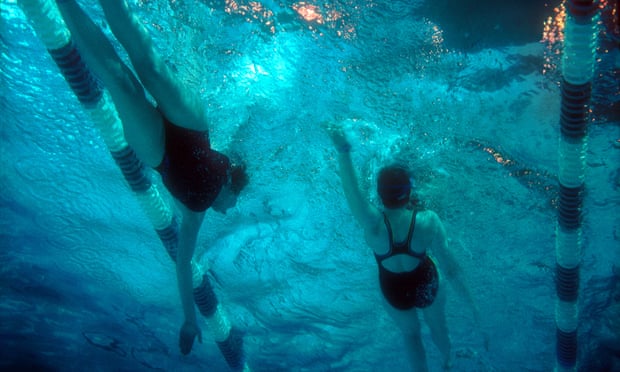
I think of this hope – I think of the undigital, the primordial – because the pool in question moves towards the modern only lurchingly, as if some inner amphibious brain is always pulling it home. If upkeep is strong, then facilities are creaky. If repairs occur, they are involved and counterproductive, suggesting that outside forces conspire to fix the pool in space and time. Members of its public embrace the ahistoric vibe. For every thirtysomething who discovered the pool in his twenties, and remembers, while he squeezes a swim in between work and sleep, how easy it used to be to laze around this pool all morning, there's at least one old-timer who has circled back around to this twentysomething fantasy and experiences it as daily life. It is always a lone man, and each of these lone men haunt the pool at odd hours, sitting in white plastic chairs, never reading, barely talking, just eking out the day with the same contented smile on each distinctive face.
In the newspaper article I'm thinking of, the pool is described as both a microcosm of society and a leveller thereof, all the classes mixing in their bathing suits. This only makes it especially delicious that the pool is literally stratified. The pool has steps, levels: a famous stack of bleachers, which becomes very crowded on a sunny day. It is up for grabs whether lying on the top row feels like you're exposing yourself to the community or parcelling yourself away. Little balconies, incidentally, overhang this pool, but only once have I seen a face peering through the windows with the rippled look of strangers behind reflecting panes. Never once have I seen anybody on the balconies, some of which are festooned with nautical souvenirs.
The gym sits above the pool in a pale alien sphere and, occasionally, at the pool, you see a sunglassed person peer up and say searchingly: “Oh! There's a gym up there.”
The pool itself is famous. It's been immortalised in films, in rare things – famous novels – and even rarer things, famous newspaper articles from the 1980s that are still sometimes photocopied and taught in university classes today. Recently, I saw footage of this iconic pool in the museums of two different capital cities, in two separate art exhibitions, exhibiting simultaneously. We love our pools, and this one especially.
I love this pool very much and need this gym very often, and as with all things we need and love, I take special licence to scrutinise its workings to a level perhaps unwarranted. This essay is a short appreciation, but some of my appreciation takes the form of complaint. As such, I choose to leave the pool – the place – anonymous, in the vain hope that there is room, in our searchable society, to keep certain details undigitised and unnamed.
I think of this hope – I think of the undigital, the primordial – because the pool in question moves towards the modern only lurchingly, as if some inner amphibious brain is always pulling it home. If upkeep is strong, then facilities are creaky. If repairs occur, they are involved and counterproductive, suggesting that outside forces conspire to fix the pool in space and time. Members of its public embrace the ahistoric vibe. For every thirtysomething who discovered the pool in his twenties, and remembers, while he squeezes a swim in between work and sleep, how easy it used to be to laze around this pool all morning, there's at least one old-timer who has circled back around to this twentysomething fantasy and experiences it as daily life. It is always a lone man, and each of these lone men haunt the pool at odd hours, sitting in white plastic chairs, never reading, barely talking, just eking out the day with the same contented smile on each distinctive face.
In the newspaper article I'm thinking of, the pool is described as both a microcosm of society and a leveller thereof, all the classes mixing in their bathing suits. This only makes it especially delicious that the pool is literally stratified. The pool has steps, levels: a famous stack of bleachers, which becomes very crowded on a sunny day. It is up for grabs whether lying on the top row feels like you're exposing yourself to the community or parcelling yourself away. Little balconies, incidentally, overhang this pool, but only once have I seen a face peering through the windows with the rippled look of strangers behind reflecting panes. Never once have I seen anybody on the balconies, some of which are festooned with nautical souvenirs.
Friday, November 9, 2018
Steve Lovett chasing down a boxing dream
Life under boxing's bright lights can be exciting. It can be lonely too.
Stressful, thrilling, draining, addictive. Highs and lows come with the territory of a life inside the squared circle. Fighters both love and loathe the physical and emotional toll they put themselves through for just one night.
But Steve Lovett is an unabashed dream chaser. He wouldn't change a thing.
Lovett (17-2) will return to the ring against Reagan Dessaix (15-1) for the World Boxing Association Oceania light heavyweight title at Tweed Heads' Seagulls Rugby League Club on Saturday night.
For Lovett, this one has been a long time coming. His last opponent pulled out just days before they were supposed to dance in May. When the chance to fight on home soil popped up, he jumped at it.
He has been training under boxing icon Ronnie Shields in Houston since 2014, but for this camp he whisked himself away to train under a man that has been exactly where Lovett wants to go.
Lovett has been training on home soil with the man that unified a glamour division of his time in Australian boxing legend Danny Geale.
Amidst the humour of mashing potatoes with a hammer during tongue-in-cheek cooking videos that label him "America's worst cook" and dancing to AC/DC in the gym under the guise of a "fair dinkum feet wizard", Lovett's end goal has never wavered.
For the record, Lovett can cook - he was once a contestant on The Great Australian Bake Off. He can dance as well. Neither of those abilities can hold a candle to his skill in the ring.
A trip to Las Vegas to watch fellow Australian Jeff Horn attempt to defend a world championship on boxing's biggest stage at the MGM Grand Garden Arena earlier this year - coincidentally at the same venue Lovett first competed at on United States soil - just fuelled the fire for the 33-year-old larrikin.

Stressful, thrilling, draining, addictive. Highs and lows come with the territory of a life inside the squared circle. Fighters both love and loathe the physical and emotional toll they put themselves through for just one night.
But Steve Lovett is an unabashed dream chaser. He wouldn't change a thing.
Lovett (17-2) will return to the ring against Reagan Dessaix (15-1) for the World Boxing Association Oceania light heavyweight title at Tweed Heads' Seagulls Rugby League Club on Saturday night.
For Lovett, this one has been a long time coming. His last opponent pulled out just days before they were supposed to dance in May. When the chance to fight on home soil popped up, he jumped at it.
He has been training under boxing icon Ronnie Shields in Houston since 2014, but for this camp he whisked himself away to train under a man that has been exactly where Lovett wants to go.
Lovett has been training on home soil with the man that unified a glamour division of his time in Australian boxing legend Danny Geale.
Amidst the humour of mashing potatoes with a hammer during tongue-in-cheek cooking videos that label him "America's worst cook" and dancing to AC/DC in the gym under the guise of a "fair dinkum feet wizard", Lovett's end goal has never wavered.
For the record, Lovett can cook - he was once a contestant on The Great Australian Bake Off. He can dance as well. Neither of those abilities can hold a candle to his skill in the ring.
A trip to Las Vegas to watch fellow Australian Jeff Horn attempt to defend a world championship on boxing's biggest stage at the MGM Grand Garden Arena earlier this year - coincidentally at the same venue Lovett first competed at on United States soil - just fuelled the fire for the 33-year-old larrikin.
In the wake of a dream
This is a statement of rebellion, if not blasphemy, when one imagines the speaker to be a Brahmin priest from 7th-century CE Tamil India. But then, all of Sharanya Manivannan's art is about rebellion and seeking. In her latest novel, The Queen of Jasmine Country, this pithy, profound sentence comes as reassuring advice from a father to a daughter — when protagonist Kodhai and her adoptive father Vishnuchittan confer on making a choice between the material and the spiritual. A slim volume — just 146 pages — this work of biographical fiction is expansive in its beauty and ardour.
Anyone familiar with Manivannan's work will agree that her writing is both sublime and powerful, in ways that echo the innermost instincts of womanhood. Her craft has deservedly been lauded, with her earlier work The High Priestess Never Marries winning the Laadli Media and Advertising Award for Gender Sensitivity. She has written two collections of poems — Witchcraft and The Altar of the Only World — as well asa children's book titled The Amuchi Pucchi.
Manivannan picks the legendary figure of Andal, an Alvar or Vaishnavite poet-saint, for her fifth book and first novel, and intertwines three subjects that come organically to her — femininity, love and magic. Andal is less history and more legend, because very little is known about the personal life of this devotional poet. She is known only through anthologies such as Nachiyar Tirumoli and Tiruppavai, all of which speak of her ecstatic, erotic lovefor the Hindu god Vishnu.
For those unfamiliar with Tamil tradition, poet Meera is a good parallel to draw from. Though a few centuries apart, both women were poet-saints from the Bhakti tradition, belonged to well-off families, and worshipped Vishnu-Krishna in the madhura bhava — where the devotee sees god as a lover or husband.
Much has been written about Meera, but Andal remains a mystery. While she has been exalted to the position of a goddess, and the ritual singing of her poems during the month of Margali (mid-December to mid-January) is an important part of Tamil culture, her life remains an enigma. Manivannan assumes the voice of Andal and imagines her story. The author has said that the subject was less of her choice and more of a divine summons — in 2014, Andal appeared in her dream and urged her to write.
Anyone familiar with Manivannan's work will agree that her writing is both sublime and powerful, in ways that echo the innermost instincts of womanhood. Her craft has deservedly been lauded, with her earlier work The High Priestess Never Marries winning the Laadli Media and Advertising Award for Gender Sensitivity. She has written two collections of poems — Witchcraft and The Altar of the Only World — as well asa children's book titled The Amuchi Pucchi.
Manivannan picks the legendary figure of Andal, an Alvar or Vaishnavite poet-saint, for her fifth book and first novel, and intertwines three subjects that come organically to her — femininity, love and magic. Andal is less history and more legend, because very little is known about the personal life of this devotional poet. She is known only through anthologies such as Nachiyar Tirumoli and Tiruppavai, all of which speak of her ecstatic, erotic lovefor the Hindu god Vishnu.
For those unfamiliar with Tamil tradition, poet Meera is a good parallel to draw from. Though a few centuries apart, both women were poet-saints from the Bhakti tradition, belonged to well-off families, and worshipped Vishnu-Krishna in the madhura bhava — where the devotee sees god as a lover or husband.
Much has been written about Meera, but Andal remains a mystery. While she has been exalted to the position of a goddess, and the ritual singing of her poems during the month of Margali (mid-December to mid-January) is an important part of Tamil culture, her life remains an enigma. Manivannan assumes the voice of Andal and imagines her story. The author has said that the subject was less of her choice and more of a divine summons — in 2014, Andal appeared in her dream and urged her to write.
Thursday, September 27, 2018
Compliment me on my beautiful baby boy, go on, do, I love it
How old is he?' asked the woman to my right as we took our seats on the plane. I don't find flying too stressful but today was proving an exception. The worst I usually get is a little bit of Altitude-Adjusted Lachrymosity, a speculative condition in which some combination of cabin pressure or recycled air results in my becoming overly sentimental if I spend the flight watching movies about brave dogs.
As it was my son's first flight, I was simply delighted we weren't being offered a sock to gag him. I clarified his age and jiggled him on my lap, as if to suggest he was the kind of baby who never cried. ‘They're so beautiful at that age,' the woman said, clasping a hand to her chest, as if it held a letter from the dreamy American soldier who stole her heart.
This kind of reaction is common and, frankly, I enjoy it. I find it rewarding to channel the world's good feeling about babies into my own store of self-worth. Like the father of a child star, pocketing his offspring's acting fees under the guise of a college fund that doesn't exist, I accept my son's compliments, but secretly enjoy them for myself.
My wife is the opposite, which is unfortunate, since she constantly attracts the chatty attentions of older English people who mistake an Irish accent for a strong desire to hear about their nephew's kids. She now leaves all such chats to me, especially since she gets uncomfortable when strangers coo and fuss over the boy. I feel uncomfortable when they don't. If half a dozen people get on the train and only five collapse into gooey awe at the sight of him, I mark the sixth for death before he sits down. ‘Maybe he hasn't seen him,' I say to myself through gritted teeth, slowly tipping the pram on its back wheels, so as to angle the child's face in his direction.
‘My youngest has just gone off to college,' my neighbour explained, with just the slightest catch in her throat. ‘No one tells you how empty your house will seem after that.'
It's true. No one had told me that. Our friends and family had prepared us for long nights, cranky strops and inflated nappies. We are offered sympathetic shoulder pats and appreciative sighs, not wide-eyed, wistful envy. When I'd told a friend we were taking our eight-week-old on a plane, he gave me the pitying stare usually reserved for news of imminent eye surgery.
‘Treasure it,' my neighbour said as we took off, with a strength of feeling that strongly implied my son could leave for college at any moment. Picking up her book, she abandoned me to the inexorable reach of time's skeletal hand. I hastily resumed play on Netflix.
‘You OK, hun?' my wife asked as we disembarked the plane. ‘Yes', I said, wiping my eye. ‘I guess Air Bud: The Soccer Dog was more emotional than I remembered'.

As it was my son's first flight, I was simply delighted we weren't being offered a sock to gag him. I clarified his age and jiggled him on my lap, as if to suggest he was the kind of baby who never cried. ‘They're so beautiful at that age,' the woman said, clasping a hand to her chest, as if it held a letter from the dreamy American soldier who stole her heart.
This kind of reaction is common and, frankly, I enjoy it. I find it rewarding to channel the world's good feeling about babies into my own store of self-worth. Like the father of a child star, pocketing his offspring's acting fees under the guise of a college fund that doesn't exist, I accept my son's compliments, but secretly enjoy them for myself.
My wife is the opposite, which is unfortunate, since she constantly attracts the chatty attentions of older English people who mistake an Irish accent for a strong desire to hear about their nephew's kids. She now leaves all such chats to me, especially since she gets uncomfortable when strangers coo and fuss over the boy. I feel uncomfortable when they don't. If half a dozen people get on the train and only five collapse into gooey awe at the sight of him, I mark the sixth for death before he sits down. ‘Maybe he hasn't seen him,' I say to myself through gritted teeth, slowly tipping the pram on its back wheels, so as to angle the child's face in his direction.
‘My youngest has just gone off to college,' my neighbour explained, with just the slightest catch in her throat. ‘No one tells you how empty your house will seem after that.'
It's true. No one had told me that. Our friends and family had prepared us for long nights, cranky strops and inflated nappies. We are offered sympathetic shoulder pats and appreciative sighs, not wide-eyed, wistful envy. When I'd told a friend we were taking our eight-week-old on a plane, he gave me the pitying stare usually reserved for news of imminent eye surgery.
‘Treasure it,' my neighbour said as we took off, with a strength of feeling that strongly implied my son could leave for college at any moment. Picking up her book, she abandoned me to the inexorable reach of time's skeletal hand. I hastily resumed play on Netflix.
‘You OK, hun?' my wife asked as we disembarked the plane. ‘Yes', I said, wiping my eye. ‘I guess Air Bud: The Soccer Dog was more emotional than I remembered'.
Wednesday, August 29, 2018
Living the Australian dream
The Batchelors are living what many would call the Australian dream, leaving their nine-to-five employment to become full-time owners of a country pub.
But the new owners of the historic Criterion Hotel in Quorn are no strangers to country life.
Robyn Hay and Paul Batchelor left the hustle and bustle of the city five years ago and have been living in Wongyarra in the state's mid-north.
The blended family are a real life Brady Bunch. Meeting 14 years ago Robyn and Paul both brought with them two children each, before eventually having a daughter of their own.
While the couple may have become accustomed to country life, owning a pub is a whole new ball game – Robyn worked in hospitality before she was a lab technician, but Paul has never set foot behind a bar.
Lack of experience didn't scare them and when the opportunity to buy the Criterion Hotel came up, Paul took it with both hands.
"You only get one chance at life, so do what you want to do. That's my motto," Paul said.
"We have always liked the idea of owning a pub. We have done a fair bit of travelling outback and country pubs always appealed.
"It's a little bit more laid back I guess, people tend to be friendlier because they are out travelling instead of out under the pump everyday."
The Batchelors had their first week as hoteliers starting last Monday and it was a baptism of fire come the weekend.
"We have been putting out fires all week," Paul laughed.
"We hit the ground running with Quorn Cup and we ended up with a heap of shearers staying on the first night for the whole week."
Nineteen-year-old Daughter Charlotte is a friendly face behind the bar and with plenty of hospitality experience, she plans to be a hands on employee.
"I have only been in town for the last couple of days, but it's really nice and it has just got a gorgeous feel to it," she said.
Son Darien, 18, is taking on a maintenance role and happy-go-lucky daughter Isabelle, 10, enhances the family feel.
The Batchelors have big plans to rejuvenate the run-down hotel, starting with bringing its character back by reinstating the original 1880 facade.
In the meantime, a short term focus for Paul is reopening the pub to seven days a week and supporting the community that has been so welcoming to his family.
"We would like to return it back to how it should be," he said. "We want to source locally as much as possible to keep the money in the community as much as we can.
"If more people in businesses did that then more communities would thrive even more so."

But the new owners of the historic Criterion Hotel in Quorn are no strangers to country life.
Robyn Hay and Paul Batchelor left the hustle and bustle of the city five years ago and have been living in Wongyarra in the state's mid-north.
The blended family are a real life Brady Bunch. Meeting 14 years ago Robyn and Paul both brought with them two children each, before eventually having a daughter of their own.
While the couple may have become accustomed to country life, owning a pub is a whole new ball game – Robyn worked in hospitality before she was a lab technician, but Paul has never set foot behind a bar.
Lack of experience didn't scare them and when the opportunity to buy the Criterion Hotel came up, Paul took it with both hands.
"You only get one chance at life, so do what you want to do. That's my motto," Paul said.
"We have always liked the idea of owning a pub. We have done a fair bit of travelling outback and country pubs always appealed.
"It's a little bit more laid back I guess, people tend to be friendlier because they are out travelling instead of out under the pump everyday."
The Batchelors had their first week as hoteliers starting last Monday and it was a baptism of fire come the weekend.
"We have been putting out fires all week," Paul laughed.
"We hit the ground running with Quorn Cup and we ended up with a heap of shearers staying on the first night for the whole week."
Nineteen-year-old Daughter Charlotte is a friendly face behind the bar and with plenty of hospitality experience, she plans to be a hands on employee.
"I have only been in town for the last couple of days, but it's really nice and it has just got a gorgeous feel to it," she said.
Son Darien, 18, is taking on a maintenance role and happy-go-lucky daughter Isabelle, 10, enhances the family feel.
The Batchelors have big plans to rejuvenate the run-down hotel, starting with bringing its character back by reinstating the original 1880 facade.
In the meantime, a short term focus for Paul is reopening the pub to seven days a week and supporting the community that has been so welcoming to his family.
"We would like to return it back to how it should be," he said. "We want to source locally as much as possible to keep the money in the community as much as we can.
"If more people in businesses did that then more communities would thrive even more so."
Subscribe to:
Posts (Atom)