Slovakia rarely commands global attention. However, this Eastern European nation made fashion history over the weekend when its president, Zuzana Čaputová, swore in the new government wearing a matching outfit, complete with a color-coordinated face mask. In fact, all members of the cabinet posed for the requisite photo in protective masks. To many, the unsettling image felt like a promo campaign for a dystopian television series or a provocative editorial spread. “Twitter cannot comprehend this,” read viral headlines. It is unclear if the move will go down as a faux pas or a brave stance.
Wednesday, April 22, 2020
When Function, Fashion, And Politics Intersect
The new normal… What is that in the time of coronavirus when unprecedented changes are reported every hour? This pandemic is affecting all areas of life, including fashion and politics: two of the world’s oldest socially distant friends. Here is a first brief look at this fascinating intersection as historic news and instantly iconic imagery continue to stream in.
Slovakia rarely commands global attention. However, this Eastern European nation made fashion history over the weekend when its president, Zuzana Čaputová, swore in the new government wearing a matching outfit, complete with a color-coordinated face mask. In fact, all members of the cabinet posed for the requisite photo in protective masks. To many, the unsettling image felt like a promo campaign for a dystopian television series or a provocative editorial spread. “Twitter cannot comprehend this,” read viral headlines. It is unclear if the move will go down as a faux pas or a brave stance.
Slovakia rarely commands global attention. However, this Eastern European nation made fashion history over the weekend when its president, Zuzana Čaputová, swore in the new government wearing a matching outfit, complete with a color-coordinated face mask. In fact, all members of the cabinet posed for the requisite photo in protective masks. To many, the unsettling image felt like a promo campaign for a dystopian television series or a provocative editorial spread. “Twitter cannot comprehend this,” read viral headlines. It is unclear if the move will go down as a faux pas or a brave stance.

Friday, March 20, 2020
Can Traceable Footwear Change The Fashion Industry’s Attitude Towards Leather?
The founder of a company that’s created traceable leather footwear is hoping her invention will help improve animal welfare across the globe and change attitudes towards leather.
Josefin Liljeqvist, a 29-year-old from Sweden, had the seeds of an idea in 2015, after spending numerous years volunteering for animal welfare charity WWF.
"I noticed that the vast majority of individuals I met on the street of Stockholm, did not see animals as a crucial part of the ecosystem," she says. "So I decided to use my background within the fashion and footwear industry to lead the change I know the world needs."
Liljeqvist launched the eponymous company in 2017, purposefully deciding against using vegan leather as she wanted to address the "root of the problem".
"We need to decrease the amount of animals that exist within the industrial farming [sector] and increase their quality of life."
Liljeqvist believes happier cows release less methane, and there is some research that supports this.
Although this is yet to be universally scientifically recognized, the entrepreneur is still eager to improve the quality of the animals’ lives, regardless of methane emissions.
Liljeqvist opted to target the high end of the fashion market – reasoning that trends "always go top to bottom" – and work with the highest end tanneries, farms and shoemakers she could find.
"The changes in the industry are clear," she explains. "We are rapidly moving away from mass production and zero experience-driven platforms towards mission-driven brands who have long term commitments, not only towards their customers, but to the planet also."
The entrepreneur says her main challenges have been to find the right partners who shared the same standards. "In the end we’re innovating and turning a traditional market upside down, and this doesn’t happen painlessly.
"But we finally found partners – from farmers to shoemakers – who believed in what we are doing and decided to stick with us."
Each shoe’s leather can be traced back to its origin using a unique number combination. The customer can then "de-code" the footwear on the company’s website and find out exactly how and where the shoe was made.
Liljeqvist also partners with various other Swedish brands in order to work towards creating new commerce standards for animals in the country.
"We’re also part of an international work group, which is led by Textile Exchange, called Responsible Leather, and we focus on those same standards for bovine creatures worldwide."
Liljeqvist’s company is made up of five employees, divided between Italy and Sweden, with the design studio based in her hometown of Uppsala.
The shoes do not come cheap, but that’s the whole point of Liljeqvist’s mission: to make animal leather a valuable product, thus valuing the animals themselves. A pair retails at around 2,800EUR, and pre-sales began in December 2019, with the company’s first line "Andrew".
"2020 is our first year in the market," Liljeqvist explains, "but our plan is to become an internationally strong and influential brand. We aspire to grow from shoes over to a full conceptual fashion house with a non-profit organization that helps animals in need, and presents a new price model for farming."
Liljeqvist is pitting her company against fashion giants such as Burberry, Tom Ford and Chanel, although this year is the brand’s first on the market.
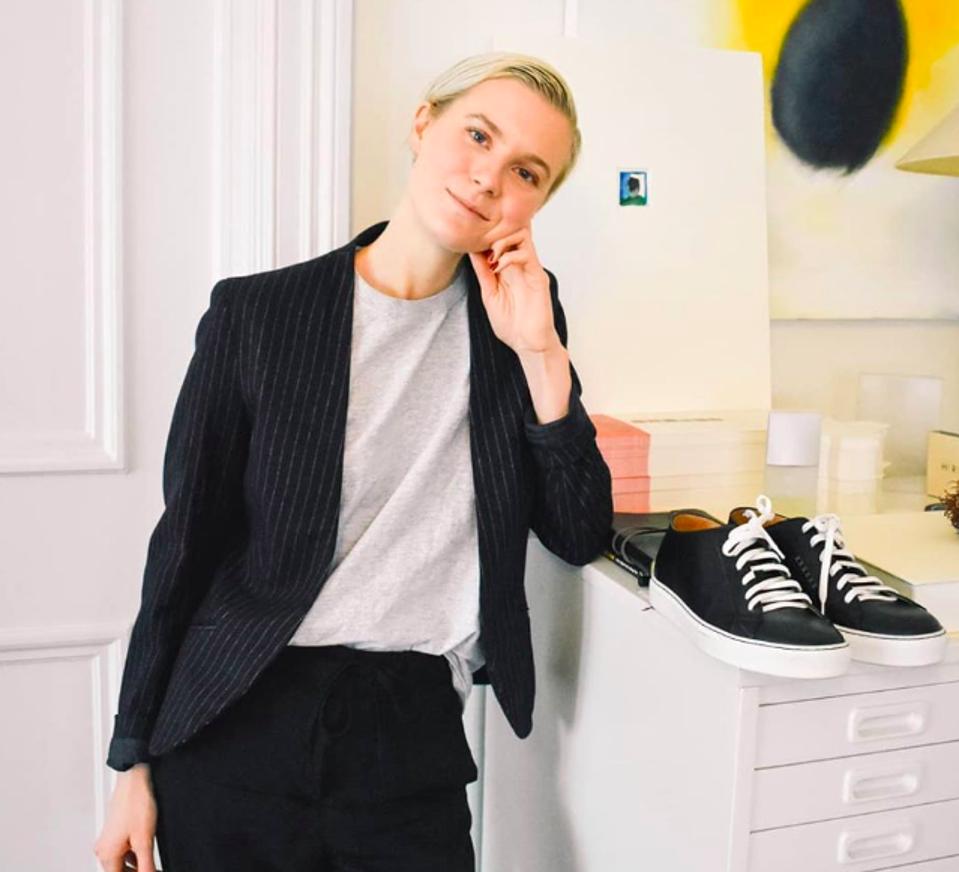
Josefin Liljeqvist, a 29-year-old from Sweden, had the seeds of an idea in 2015, after spending numerous years volunteering for animal welfare charity WWF.
"I noticed that the vast majority of individuals I met on the street of Stockholm, did not see animals as a crucial part of the ecosystem," she says. "So I decided to use my background within the fashion and footwear industry to lead the change I know the world needs."
Liljeqvist launched the eponymous company in 2017, purposefully deciding against using vegan leather as she wanted to address the "root of the problem".
"We need to decrease the amount of animals that exist within the industrial farming [sector] and increase their quality of life."
Liljeqvist believes happier cows release less methane, and there is some research that supports this.
Although this is yet to be universally scientifically recognized, the entrepreneur is still eager to improve the quality of the animals’ lives, regardless of methane emissions.
Liljeqvist opted to target the high end of the fashion market – reasoning that trends "always go top to bottom" – and work with the highest end tanneries, farms and shoemakers she could find.
"The changes in the industry are clear," she explains. "We are rapidly moving away from mass production and zero experience-driven platforms towards mission-driven brands who have long term commitments, not only towards their customers, but to the planet also."
The entrepreneur says her main challenges have been to find the right partners who shared the same standards. "In the end we’re innovating and turning a traditional market upside down, and this doesn’t happen painlessly.
"But we finally found partners – from farmers to shoemakers – who believed in what we are doing and decided to stick with us."
Each shoe’s leather can be traced back to its origin using a unique number combination. The customer can then "de-code" the footwear on the company’s website and find out exactly how and where the shoe was made.
Liljeqvist also partners with various other Swedish brands in order to work towards creating new commerce standards for animals in the country.
"We’re also part of an international work group, which is led by Textile Exchange, called Responsible Leather, and we focus on those same standards for bovine creatures worldwide."
Liljeqvist’s company is made up of five employees, divided between Italy and Sweden, with the design studio based in her hometown of Uppsala.
The shoes do not come cheap, but that’s the whole point of Liljeqvist’s mission: to make animal leather a valuable product, thus valuing the animals themselves. A pair retails at around 2,800EUR, and pre-sales began in December 2019, with the company’s first line "Andrew".
"2020 is our first year in the market," Liljeqvist explains, "but our plan is to become an internationally strong and influential brand. We aspire to grow from shoes over to a full conceptual fashion house with a non-profit organization that helps animals in need, and presents a new price model for farming."
Liljeqvist is pitting her company against fashion giants such as Burberry, Tom Ford and Chanel, although this year is the brand’s first on the market.
Monday, December 30, 2019
Jumpstart Your Happy New Year
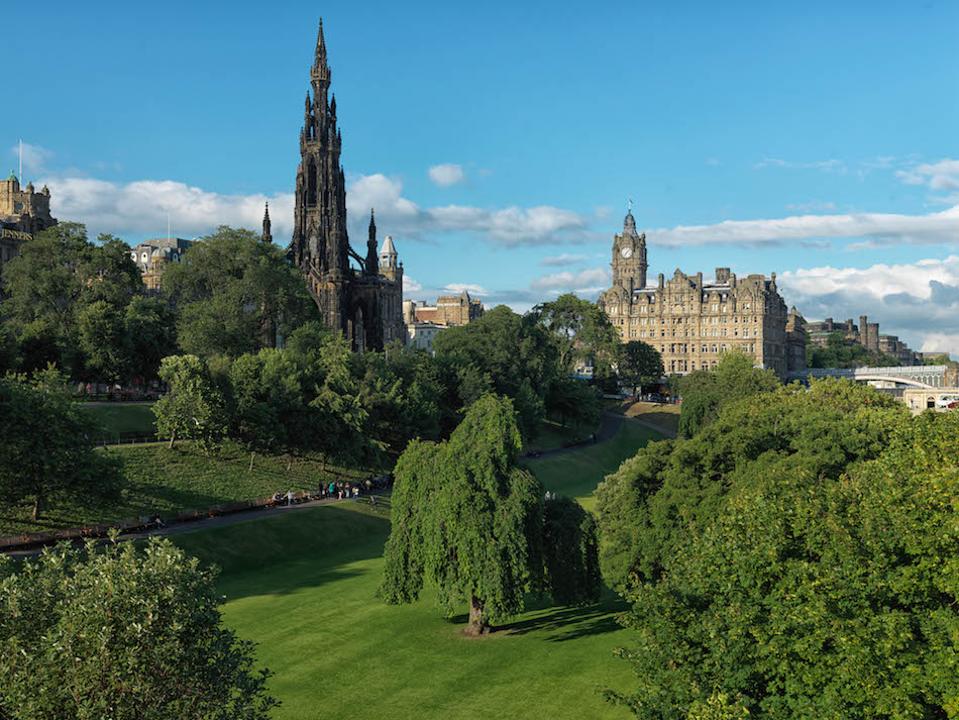
A new year, a new decade. Make the most of your horizons ahead by being open to possibilities. Say yes to opportunity more than no. Nurture wanderlust, embracing travel and its transformative magic. The following uplifting encouragements are paired with evocative images by Getty photographers. Go ahead. See how far 2020 can take you. Or, rather, decide how far you will take 2020 and beyond. Here, notable quotes to ponder along the way.

One of the best places to stay is The Balmoral, the grand hotel where JK Rowling wrote her final book in the famous Harry Potter book series, Harry Potter and the Deathly Hallows. If you stay in the JK Rowling suite, you’ll see the historic bust that she signed when she finished the novel. Conveniently located at One Princes street right beside Waverley train station, the hotel provides some of the best views up to Edinburgh Castle. In fact, The Balmoral was originally known as the North British Station Hotel, owned by the North British Railway Company when it opened in 1902. The time in the clock tower has always been deliberately set three minutes fast to ensure that train passengers who were running late made it to their trains. The hotel has been a Rocco Forte property since 1997, one of only two UK hotels in the luxury group.
Thursday, November 28, 2019
How Data Helps Fight Fashion Waste
Geeks and fashion don’t usually mix. Software engineers and other technology professionals are known for their reliance on t-shirts, sandals (often worn with socks) or sneakers and a predilection for wearing shorts in the freezing rain and snow. A bold fashion statement for most software engineers is making the decision to dye their hair green or blue.
But putting techie stereotypes aside for a moment, a new intersection point between the tech community and the fashion industry cognoscenti could be surfacing. The fashion industry is notoriously bad at product waste… and technology wants to come to the rescue.
Just hanging around
The BBC has reported one recent example where a fashion designer has helped to develop recyclable clothes hangers. Data analytics applied across fashion industry supply chains has shown the scale of waste in the business; designer Roland Mouret suggests that single-use clothes hangers are the ‘plastic straw’ of the fashion industry.
Working with scientists, Mouret and his team have developed a new hanger constructed from 80% recycled ‘recovered sea plastic’ and 20% recyclable plastic. The hanger problem is not just down to customers discarding them after purchase; apparently some fashion companies ship clothes on cheap hangers (which are then thrown away) before they transfer products to ‘fancier’ hangers in store.
Hanger recycling company First Mile says that hangers take 1,000 years to break down in landfill. Clearly we need smarter supply chains, smarter city distribution networks, smarter adoption of recycled products and smarter hangers if we are going to combat this waste.

Ball Dresses
Sunday, October 27, 2019
The Biggest Fashion Trend for 2020 May Be Protest
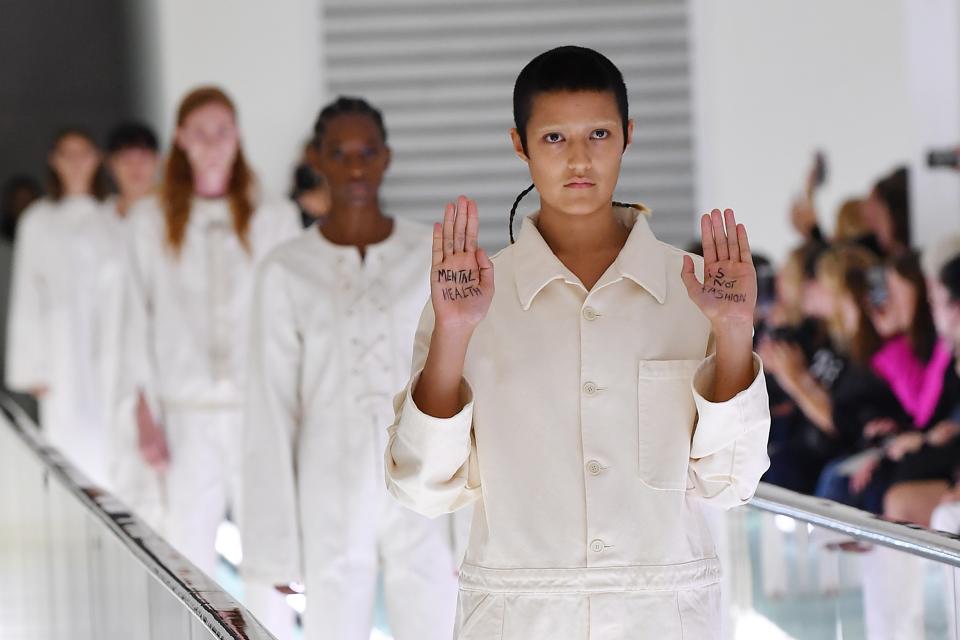
Mental health protest took center stage in Milan recently when a Gucci designer offended masses of fashion fans, including one of his models. In a bold move made for Instagram, a Gucci model walked the runway in protest with the words Mental Health is Not Fashion penned in black on their palms. Arms out, palms forward, the image was posted and liked by hundreds of thousands of people. The model wrote, "As an artist and a model who has experienced her own struggles with mental health, as well as family members and loved ones who have been affected by depression, anxiety, bipolar and schizophrenia, it is hurtful and insensitive for a major fashion house such as Gucci to use this imagery as a concept for a fleeting fashion moment." The designer defended the pieces he called ‘blank style" and told reporters that his utilitarian designs were meant to send different message. Still, many critics said the piece shown looked like a straight-jacket and deemed the work highly offensive.
Controversy Has Its Moment
While this example may seem like something far from mainstream, it's not. Major brands have been deeply apologetic and responsive to the public when they hit a nerve. This is the second time mental health made headlines on the runway. After a model wrote on Instagram that ‘suicide is not fashion', referring to a Burberry hoodie that featured a noose around the neck, Burberry pulled the item from stores and the company's chief executive officer issued an apology in a statement to CNN. The Burberry model, Liz Kennedy, said she had tried to speak out about the design she found offensive before the show, but was ignored. She later posted on Instagram: "It is beyond me how you could let a look resembling a noose hanging from a neck out on the runway."
Other earlier examples related to mental health come to mind, too. Protests over underweight models plagued the industry for decades and still do. Victoria's Secret apologized publicly after an executive made controversial statements about transgender and plus-size models being unlikely picks for their annual Fashion Show. The remark was made during a chat with Vogue. The executive, Ed Razek, said that constant suggestions and questions about why they didn't use this or that model took away from an event that was designed to be a 42-minute branded television fantasy. Harsh critical comments on social media got the spotlight. But any attempt to backtrack was for naught. Victoria's Secret, favorite of American men and women, is seeing shrinking profits.
 gallakjoler
Controversy Has Its Moment
While this example may seem like something far from mainstream, it's not. Major brands have been deeply apologetic and responsive to the public when they hit a nerve. This is the second time mental health made headlines on the runway. After a model wrote on Instagram that ‘suicide is not fashion', referring to a Burberry hoodie that featured a noose around the neck, Burberry pulled the item from stores and the company's chief executive officer issued an apology in a statement to CNN. The Burberry model, Liz Kennedy, said she had tried to speak out about the design she found offensive before the show, but was ignored. She later posted on Instagram: "It is beyond me how you could let a look resembling a noose hanging from a neck out on the runway."
Other earlier examples related to mental health come to mind, too. Protests over underweight models plagued the industry for decades and still do. Victoria's Secret apologized publicly after an executive made controversial statements about transgender and plus-size models being unlikely picks for their annual Fashion Show. The remark was made during a chat with Vogue. The executive, Ed Razek, said that constant suggestions and questions about why they didn't use this or that model took away from an event that was designed to be a 42-minute branded television fantasy. Harsh critical comments on social media got the spotlight. But any attempt to backtrack was for naught. Victoria's Secret, favorite of American men and women, is seeing shrinking profits.
Monday, August 19, 2019
Some Bike Lanes Protect Cyclists Better Than Others
All bike lanes are not created equal.
Protected bicycle lanes - separated from traffic by physical barriers like parked cars, a curb, landscaping or posts - may make cyclists feel safer and encourage more people to ride, but they vary in terms of the buffer they provide. Some leave cyclists more vulnerable to injury than others.
Overall, street-level protected bike lanes are high risk for injury, while conventional bike lanes — separated from traffic by painted lane markings, but without physical barriers - are less risky, possibly because they are often installed on safer roads to begin with.
Protected bike lanes raised from the road are the safest.
Those are the highlights of a new study that looked at how bike lane design impacts safety.
The report, released on Thursday by the Insurance Institute for Highway Safety, a nonprofit financed by the insurance industry, looked at the injury risks associated with different types of cycling infrastructure and suggested ways to make riding safer. Research was conducted in collaboration with George Washington University, Oregon Health and Science University and New York University.
The study comes at a time when cycling fatalities are on the rise. Bicyclists’ deaths have increased 25 percent since reaching their lowest point in 2010, according to the study.
When researchers compared the likelihood of having a crash or fall on a major road with no bike infrastructure to two-way protected bike lanes, the risk was much lower on lanes on bridges or raised from the road like those within green ways than on lanes at street level.

Protected bicycle lanes - separated from traffic by physical barriers like parked cars, a curb, landscaping or posts - may make cyclists feel safer and encourage more people to ride, but they vary in terms of the buffer they provide. Some leave cyclists more vulnerable to injury than others.
Overall, street-level protected bike lanes are high risk for injury, while conventional bike lanes — separated from traffic by painted lane markings, but without physical barriers - are less risky, possibly because they are often installed on safer roads to begin with.
Protected bike lanes raised from the road are the safest.
Those are the highlights of a new study that looked at how bike lane design impacts safety.
The report, released on Thursday by the Insurance Institute for Highway Safety, a nonprofit financed by the insurance industry, looked at the injury risks associated with different types of cycling infrastructure and suggested ways to make riding safer. Research was conducted in collaboration with George Washington University, Oregon Health and Science University and New York University.
The study comes at a time when cycling fatalities are on the rise. Bicyclists’ deaths have increased 25 percent since reaching their lowest point in 2010, according to the study.
When researchers compared the likelihood of having a crash or fall on a major road with no bike infrastructure to two-way protected bike lanes, the risk was much lower on lanes on bridges or raised from the road like those within green ways than on lanes at street level.
Balklänningar
Subscribe to:
Posts (Atom)